

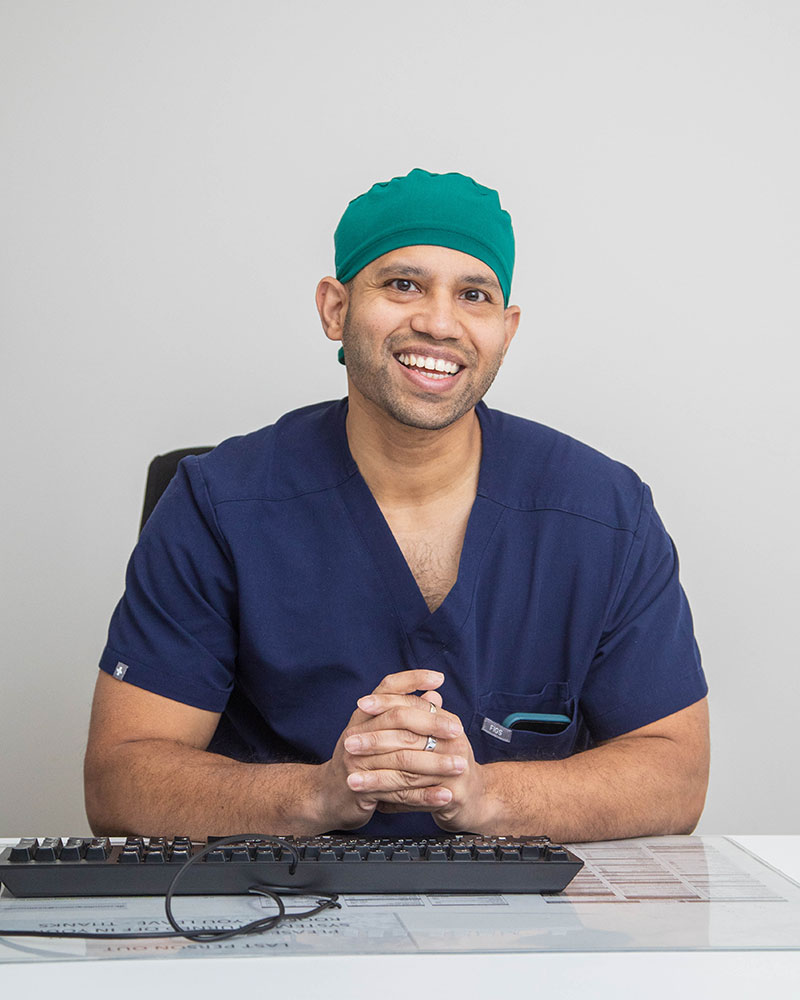
Dr Debjyoti (Deb) Karmakar
Obstetrician Gynaecologist and Pelvic Floor Surgeon
MBBS(Hons.),FRCOG(UK),FRANZCOG,PhD
Dr Deb Karmakar is a Melbourne-based Minimally Invasive Gynaecologist with a special interest in Urogynaecology. With over 20 years of experience across India, the UK, and Australia, he provides expert care for complex gynaecological and pelvic floor conditions.
After graduating from Calcutta University, Dr Karmakar completed his Obstetrics and Gynaecology training at AIIMS, New Delhi—one of India’s premier institutions. He then pursued advanced subspecialty training in Urogynaecology and Minimally Invasive Surgery in the UK before moving to Australia. He has been a recognised specialist since 2018, following further training at Mercy Hospital for Women, Melbourne that included a Urogynaecology fellowship.
Reflecting his focus on personalised and adaptive medicine, Dr Karmakar completed a PhD at the University of Melbourne in novel artificial intelligence techniques in women’s health. He has also practised in regional Victoria and continues to provide care there.
Dr Karmakar has vast clinical experience in treating patients with a variety of complex conditions. He has close collaborations with surgeons in other specialties (colorectal surgeons, urologists, perioperative physicians) as well as allied health practitioners (physiotherapists, psychologists).
Dr Karmakar welcomes referrals for various cases, including but not limited to:
- Pelvic organ prolapse
- Lower urinary tract dysfunction
- Urinary incontinence
- Bowel dysfunction
- Postpartum pelvic floor disorders
- Pelvic floor related sexual dysfunction
- Pelvic pain including all stages of endometriosis
- Abnormal uterine bleeding
- Minimally invasive hysterectomies
Deb is committed to offering his patients a comprehensive and thorough approach, whilst prioritising patient-centred care.
Research
Current Research focus:
In addition to his academic expertise in urogynaecology and gynaecology, Dr Karmakar’s current work focuses on the intersection of patient-centred precision medicine and artificial intelligence in women’s health—particularly in perinatal care and the diagnosis of complex conditions such as endometriosis.
ASSOCIATIONS